Engineered Hardwood vs. Solid Hardwood vs. Laminate and LVP
Not every room needs the same flooring product, and knowing the difference between the three makes the decision a lot easier.
September 23, 2026 · 3 min read
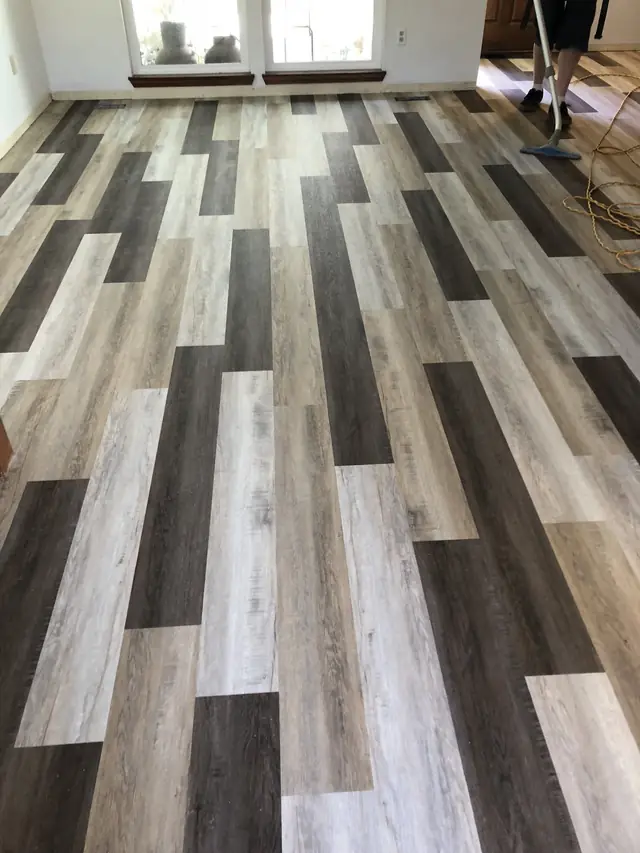
Not every room in a house calls for the same flooring product, and homeowners in the Treasure Valley often end up choosing between solid hardwood, engineered hardwood, and laminate or luxury vinyl plank without fully understanding what separates them. Idaho Hardwood Flooring installs all of these, and each one is suited to different rooms and different priorities depending on moisture, budget and how the space gets used day to day.
Solid hardwood: the traditional choice
Solid hardwood is exactly what it sounds like: a plank milled from a single piece of wood, in species like walnut, maple, oak, hickory, pine or birch. It's the option most people picture when they imagine a hardwood floor, and it can be sanded and refinished multiple times over its life, which is a real advantage over products that can't be refinished at all. It's also generally the most affected by moisture and humidity of the three, which is a broad fact about solid wood flooring as a material, true of any brand or installer, not a limitation specific to one product.
Engineered hardwood: built for stability
Engineered hardwood is designed with layers of wood, which provide added stability and help block moisture, according to Idaho Hardwood Flooring's own description of the product. Because of that layered construction, it will never warp or swell the way solid wood can under the wrong conditions, which makes it a common choice for rooms or homes where moisture is more of a factor. Idaho Hardwood Flooring installs engineered hardwood from new installation through repairs, and offers expert advice on which specific product suits a given home, since engineered options vary quite a bit by brand and construction.
Laminate and luxury vinyl plank: the practical alternative
Laminate flooring is built to give the look of hardwood without the cost of real wood, and Idaho Hardwood Flooring installs it alongside luxury vinyl plank, often called LVP. LVP has its own set of advantages that Idaho Hardwood Flooring lists directly: water resistance, improved durability, more realistic visuals than older vinyl products, easier cleaning and maintenance, and a wide variety of styles to choose from. That combination makes it a common pick for kitchens, bathrooms, mudrooms and other rooms where water and heavy use are a daily reality, rooms where solid hardwood is a harder sell.
Built for commercial and residential work
Idaho Hardwood Flooring's own logo describes them as handling both commercial and residential work, alongside new installation, repairs and restoration. One of their Google reviewers, Lisa Campbell, backs that up: "I know of many commercial and residential installations this company has done. They have always provided excellent customer service and installation. I would recommend them to anyone looking for a fair price, great service, and beautiful flooring." They're also a National Wood Floors Association member and a BBB-accredited business, credentials that apply across all three flooring types covered here, not just one, and every installation carries the same one-year labor warranty regardless of which product you choose.
How they hold up over time
In general terms across the flooring trade, harder wood species and multi-layer engineered products tend to resist dents and wear differently than laminate's protective top layer, though the exact wear characteristics vary by product line, which is a good reason to look at samples in person rather than go by product category alone. That general point aside, Idaho Hardwood Flooring's own installations across solid, engineered, laminate and LVP each carry their published one-year labor warranty, so the backing behind the work doesn't change based on which product ends up right for your room.
Matching the product to the room
None of these three products is universally better, they just solve different problems. A formal dining room or living room with low moisture exposure is a natural fit for solid hardwood, especially if you want the option to refinish it decades from now. A basement, a home with more humidity swings, or a room over a slab is often a better fit for engineered hardwood because of its layered stability. A kitchen, laundry room, entryway or bathroom leans toward LVP for the water resistance. Whichever direction you're leaning, it helps to walk the actual rooms with someone who installs all three, rather than guessing from a showroom sample.
Idaho Hardwood Flooring offers a free consultation to talk through which product fits which room in your home. You can reach them at (208) 547-5571.
Idaho Hardwood Flooring, (208) 547-5571
Call (208) 547-5571More articles
Refinish or Replace? What an Older Hardwood Floor Can Still Give You
A look at what refinishing can restore in an older hardwood floor, with two real examples from homes in the Treasure Valley.
Choosing a Hardwood Species for Your Boise Home
The wood species under your stain matters as much as the color you choose, and each one behaves a little differently over time.